Integrated technology,
superior results
We master every key process needed to turn sheet metal into components and high-value-added assemblies.

We master every key process needed to turn sheet metal into components and high-value-added assemblies.
We master the entire cold stamping process for sheet metal, from coil to finished part, with the capacity to handle short development runs as well as high-volume production.
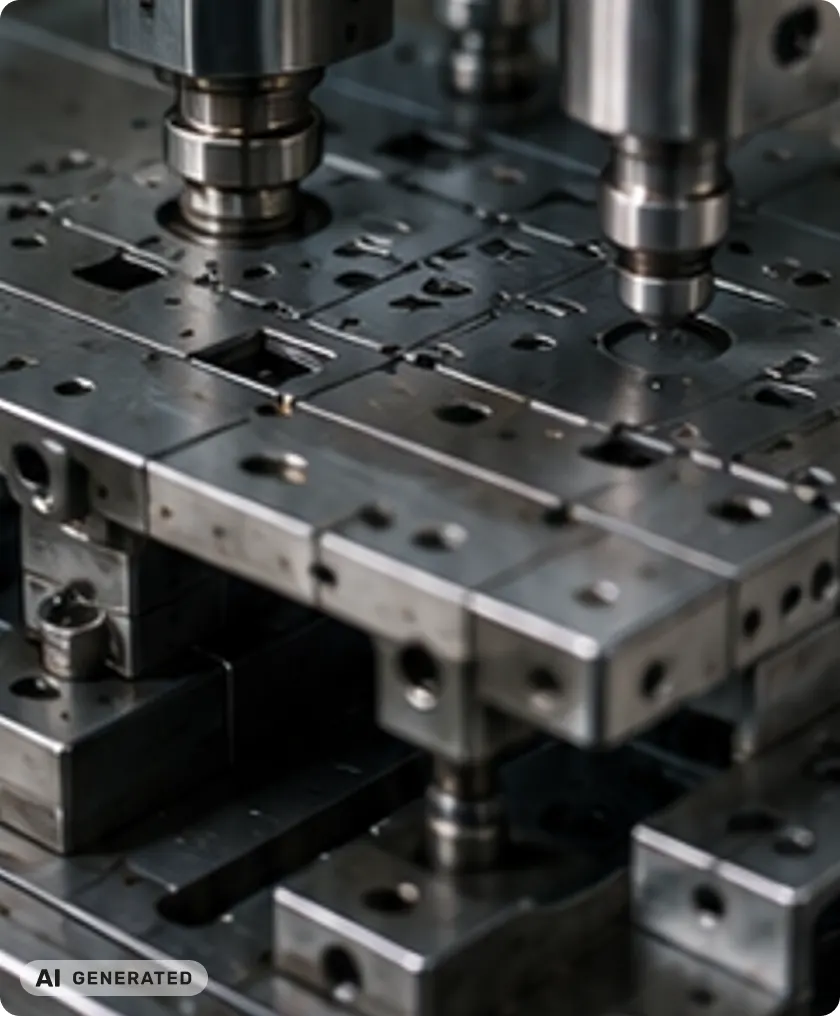
We work with mechanical and hydraulic presses and have a wide range of in-house tooling that adapts to the geometric and dimensional complexity of each component:
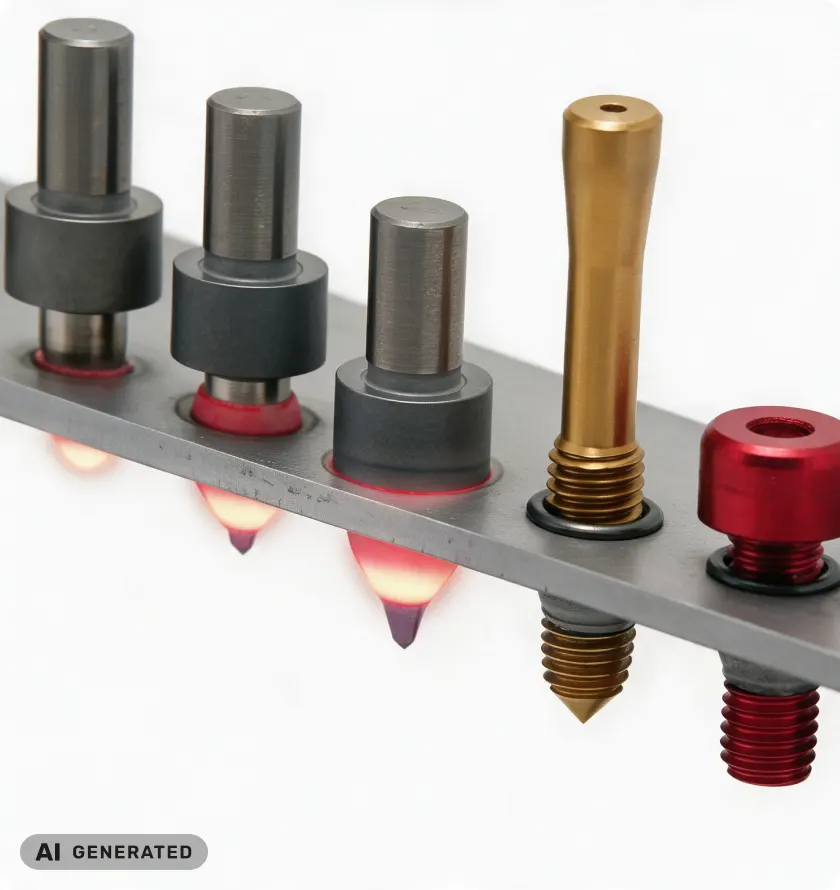
Flowdrill technology makes it possible to create functional threads directly in thin sheet or tube without the need for an additional nut, using the heat generated by friction to displace and form the base material.
The process involves pressing a rotating tungsten carbide tool against the sheet: friction locally raises the temperature of the metal above its plasticity point, causing the material to flow downwards and form a cylindrical bush which, in a second stage, is threaded directly with an integrated forming tap.
Key advantages
Technologies for integrating functional components into the stamped part or creating permanent joints without adding extra material.
With component
Nut and stud insertion
(Clinch nuts, Weld nuts, press-in studs)
Provides high-strength threads in thin sheet without deforming the material. Ensures technical reliability, secure demountable assemblies and fast, automatable processing.
Self-drilling and self-tapping screws
Joins sheets directly in a single step with no pre-drilling. Reduces cycle times, eliminates preliminary operations and ensures strong fastenings with single-sided access.
Without component
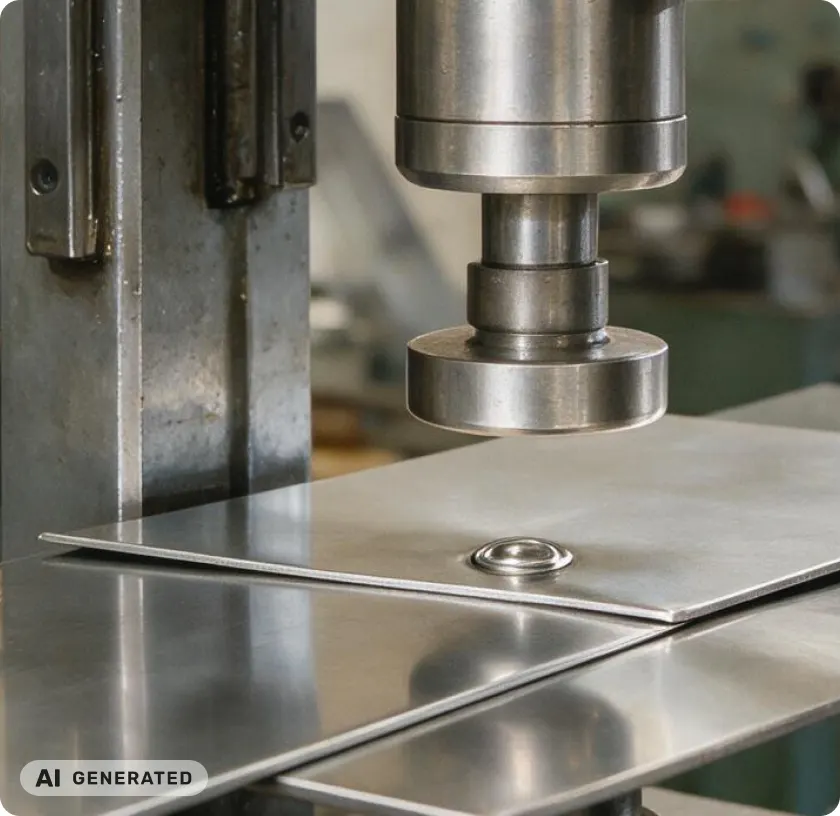
Clinching (Tox / Pressjoining)
Joins sheets by cold deformation with no external elements or heat input. Preserves the material’s coatings, reduces consumable costs and is a sustainable process.
Riveting
Joins similar or dissimilar materials through local plastic deformation. Offers high mechanical resistance to vibration, a cost-effective process and a clean joint with no thermal distortion.
A wide range of welding processes to meet the structural, dimensional and finish requirements of each assembly:
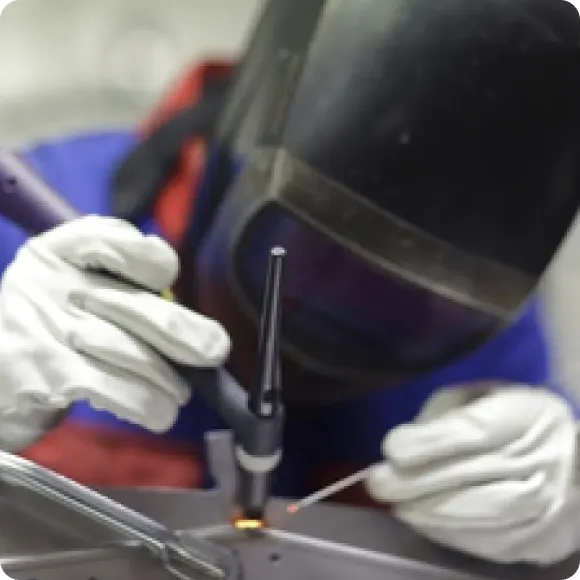
High precision and bead quality, suited to demanding materials and geometries with difficult access.
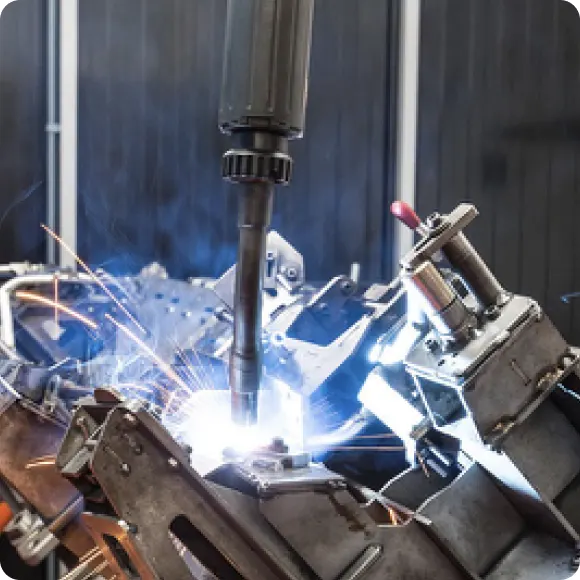
A versatile, productive process for carbon and stainless steels, in manual, semi-automatic and robotic configurations.
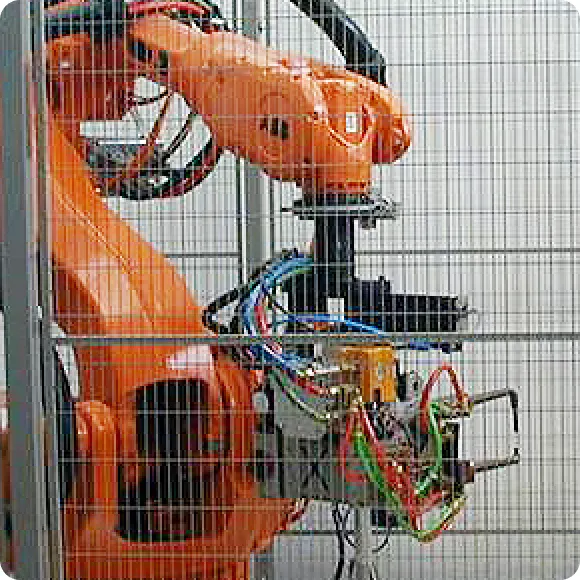
Spot joining using pressure electrodes in robotic cells. High repeatability, fast cycles and minimal heat-affected zone.
We select the optimum technology based on the material, geometry, function and production volume to ensure the best technical and economic solution.
We modify and optimise the mechanical properties of stamped parts when the application requires it. The full hardening and tempering cycle is carried out in a controlled, traceable way at our own facilities.
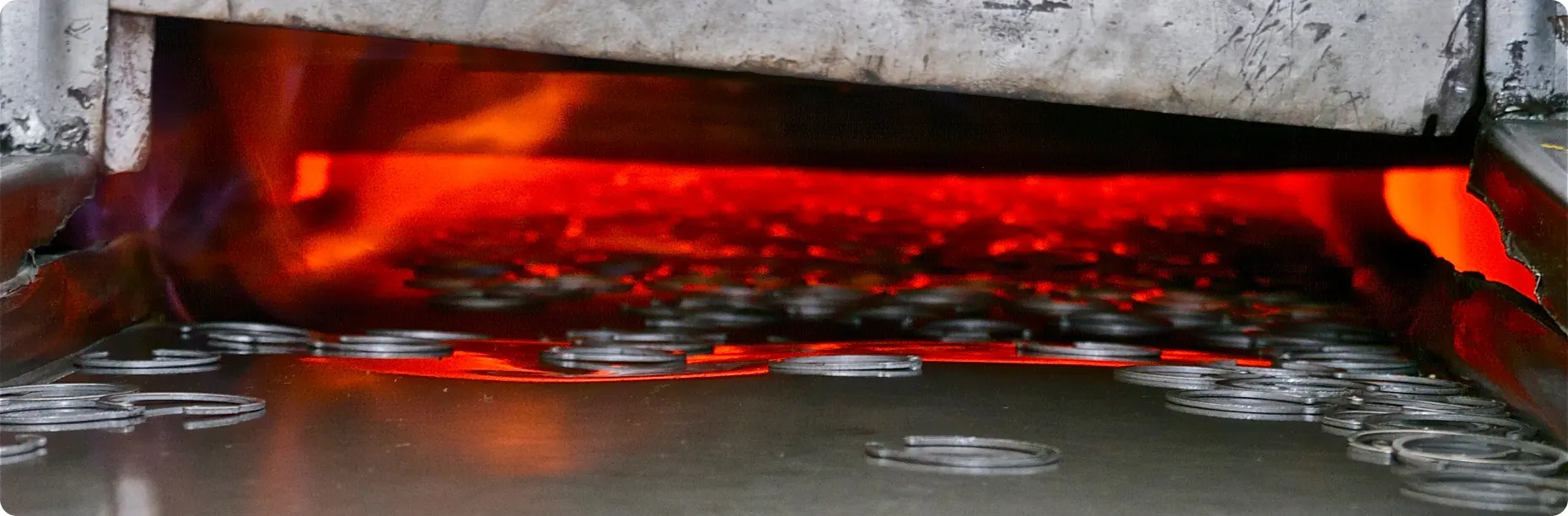
Heating to the steel’s austenitising temperature followed by rapid, controlled cooling to obtain high-hardness martensite.
Controlled cycles that adjust hardness, reduce internal stresses and improve toughness.
An optimal balance of hardness, strength and toughness, with full process traceability and verified hardness testing.
Processes that improve the surface quality and final appearance of parts.
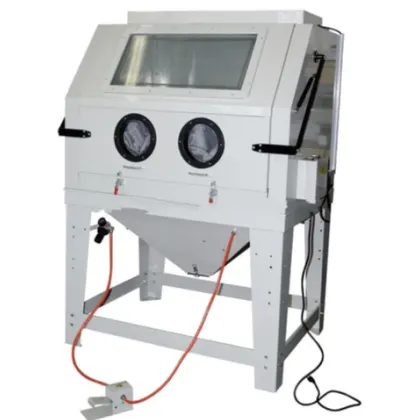
Cleaning, descaling and controlled roughness to improve coating adhesion.
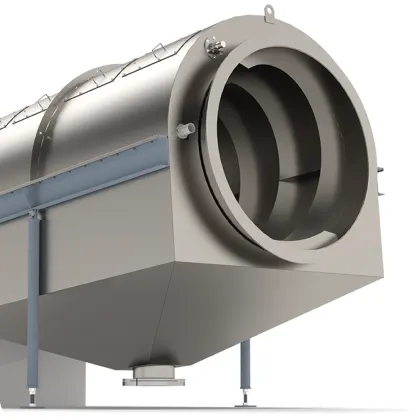
Mass deburring and polishing for uniform finishes free of tooling marks.
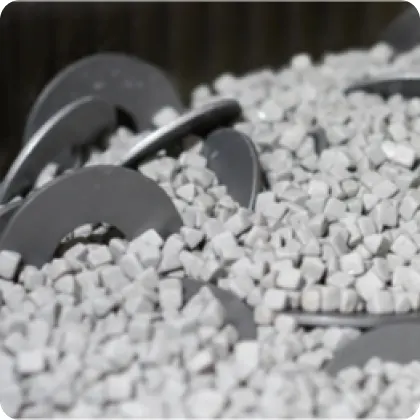
Controlled finishing by vibration, ideal for delicate or high-precision parts.
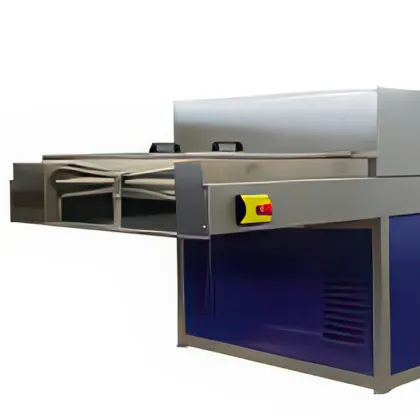
Removal of moisture after washing or treatment processes, ensuring final quality.


