Industrial capabilities

At EDSAONE, capability is not measured by the number of presses or robots. It is measured by the ability to understand a technical requirement, define the most efficient process to meet it, and carry it out with precision and repeatability.

In-house resources, applied engineering and active industrialisation: three pillars working together so that your component reaches production under the best possible conditions.
Request your technical enquiry


    • Stamping
    • Joining
    • Heat
      treatment
    • Finishing
    • Assembly

    Press shop

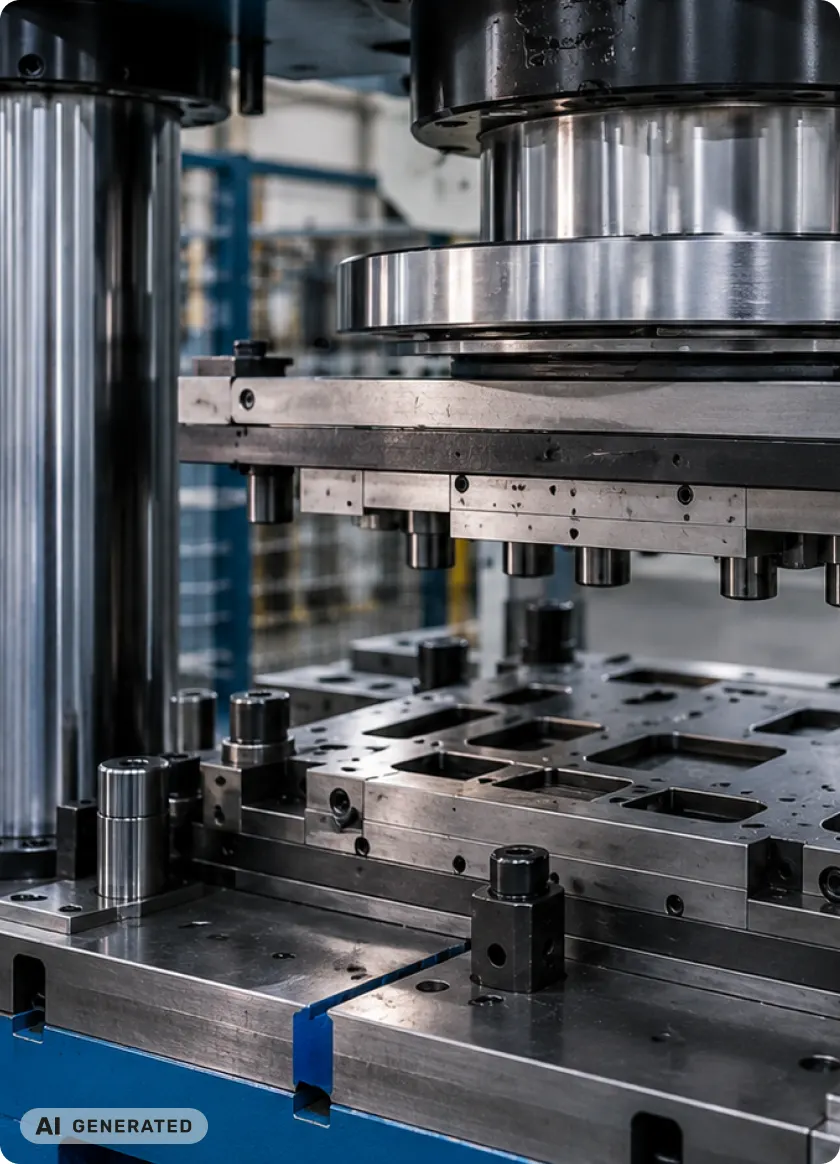
    A line of mechanical and hydraulic presses covering a wide tonnage range, equipped to work with progressive, transfer and parametric dies. Able to handle a variety of formats and thicknesses, from precision parts made from coil to larger structural components.

    • Mechanical presses: High production rates with automatic feed systems for large cold stamping runs.
    • Hydraulic presses: Constant force throughout the stroke, ideal for deep drawing processes and complex parts.
    • Servo-mechanical presses (Servo): Precise control of speed and pressure for demanding geometries, high repeatability and full flexibility.
    • C-frame presses: Open structure with quick access, ideal for auxiliary operations, manual blanking and cutting.
    • Double-column presses (H-frame): Maximum rigidity and torsional stability for heavy-duty work, progressive dies and high tonnage.
    • Automated progressive lines: Integrated feeders and decoilers for continuous processing of sheet metal from coil.
    • Robotic stamping cells: Automated loading, unloading and handling to optimise cycle times and ensure maximum safety.
    • Wide tonnage range: Flexible capacity spanning from low precision forces to high forming tonnages.
    Prensa hidráulica con un troquel de estampación (imagen generada con IA)

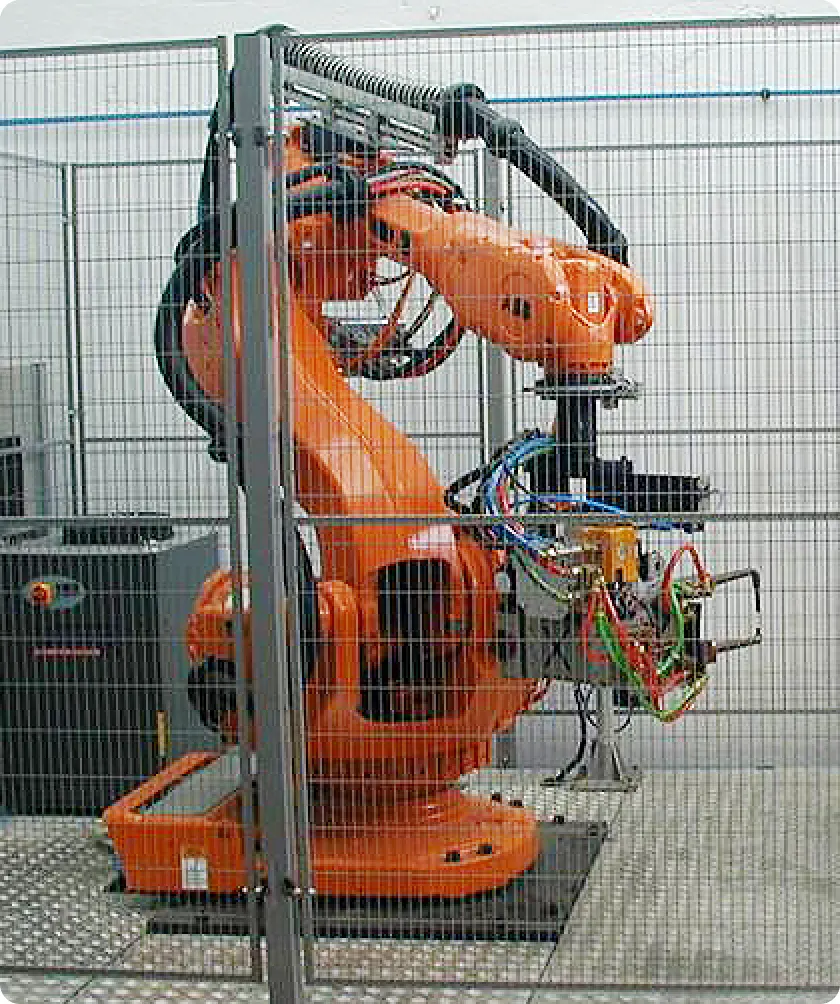
    Robot de soldadura dentro de una célula robotizada

    Welding cells

    Robotic and semi-automatic cells for resistance (RSW), MIG-MAG and TIG welding, configured for series production with high repeatability. Each cell is custom-designed according to the geometry of the assembly and the cycle rate requirements of the project.

    • Resistance welding cells (RSW): High-speed, repeatable robotic spot welding, ideal for clean joints without thermal distortion.
    • Robotic MIG-MAG cells: High-productivity automation for continuous, consistent welds on thick-gauge metal structures and components.
    • TIG welding units: High precision and superior aesthetic finish on stainless steels and aluminium, ensuring top quality in critical joints.
    • Versatile MIG-MAG units: Operational flexibility for manual or semi-automatic welding suited to short runs, prototypes and complex geometries.
    • Flexible multi-process cells: Adaptable robotic integration combining different welding technologies to optimise cycle and production times.
    • Intelligent process control: Real-time parameter monitoring that ensures penetration, strength and full traceability of every weld bead.

    Heat treatment furnaces

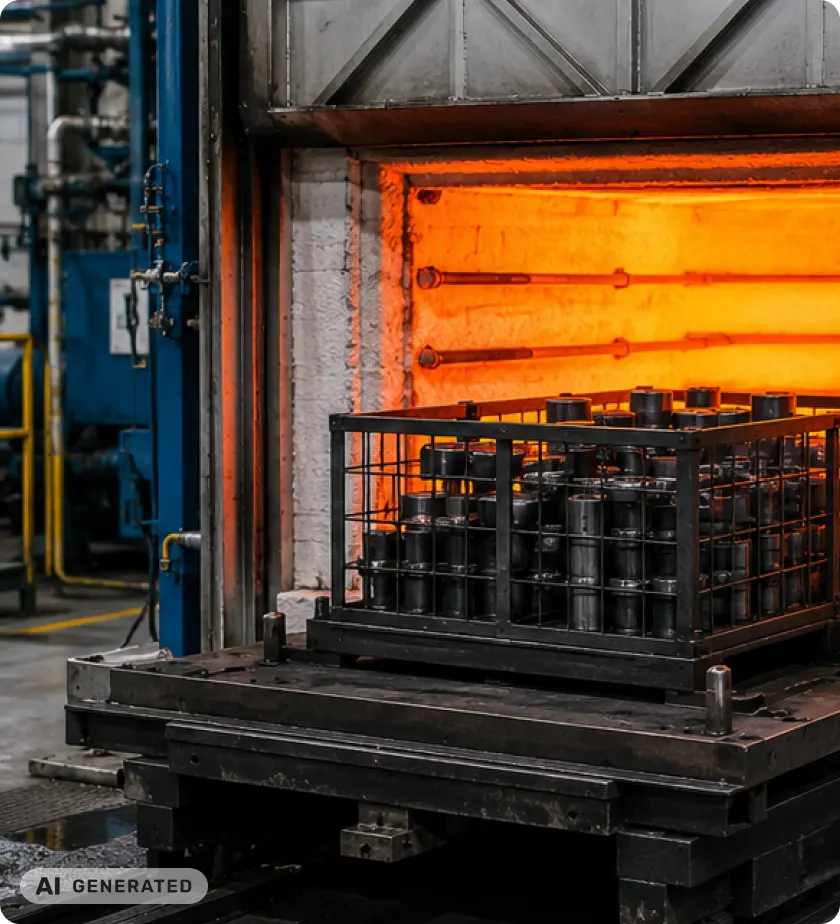
    In-house facility with 1 hardening furnace and 3 tempering furnaces, with atmosphere control and thermal cycle recording per batch. This allows the hardening-tempering cycle to be carried out without subcontracting, with full process traceability.

    • 1 hardening furnace with control of temperature, atmosphere and cooling rate.
    • Oil quenching capability according to material specification and target hardness.
    • 3 tempering furnaces with independent thermal programmes per part number.
    • Tempering temperature range configurable between 150 ºC and 660 ºC depending on the final hardness level required.
    Interior de un horno de temple con piezas metálicas incandescentes (imagen generada con IA)

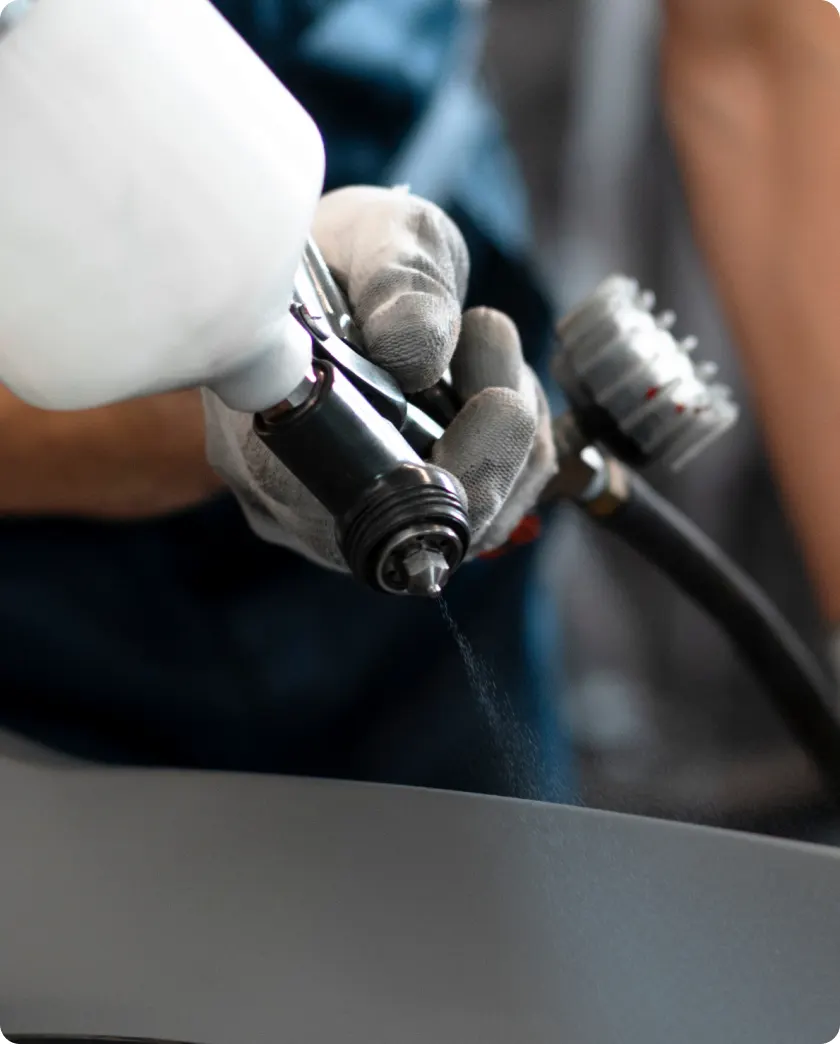
    Operario aplicando un acabado superficial con pistola sobre una pieza metálica

    Finishing equipment

    Sandblasting, tumbling and vibratory finishing equipment, plus drying ovens, for bulk surface treatment of parts and assemblies. Able to prepare surfaces before coating, painting or final delivery.

    Sandblasting (shot blasting): high-speed abrasive projection for cleaning, descaling and generating controlled roughness, improving the adhesion of paints, phosphate coatings and functional coatings.

    Tumbling (rotary drum): bulk deburring and edge rounding for small and medium-sized parts, a uniform process with no fixture marks.

    Vibratory finishing: vibration finishing with specific abrasive media, offering greater control over process aggressiveness: suitable for parts with delicate geometries or strict dimensional requirements.

    Drying ovens: controlled removal of moisture and process residues after washing, phosphating or surface treatment, ensuring the surface condition before subsequent operations.

    Selection of the process and abrasive media according to material, geometry and finish specification.

    Traceability of surface condition built into the control plan for each part number.


    Assembly systems

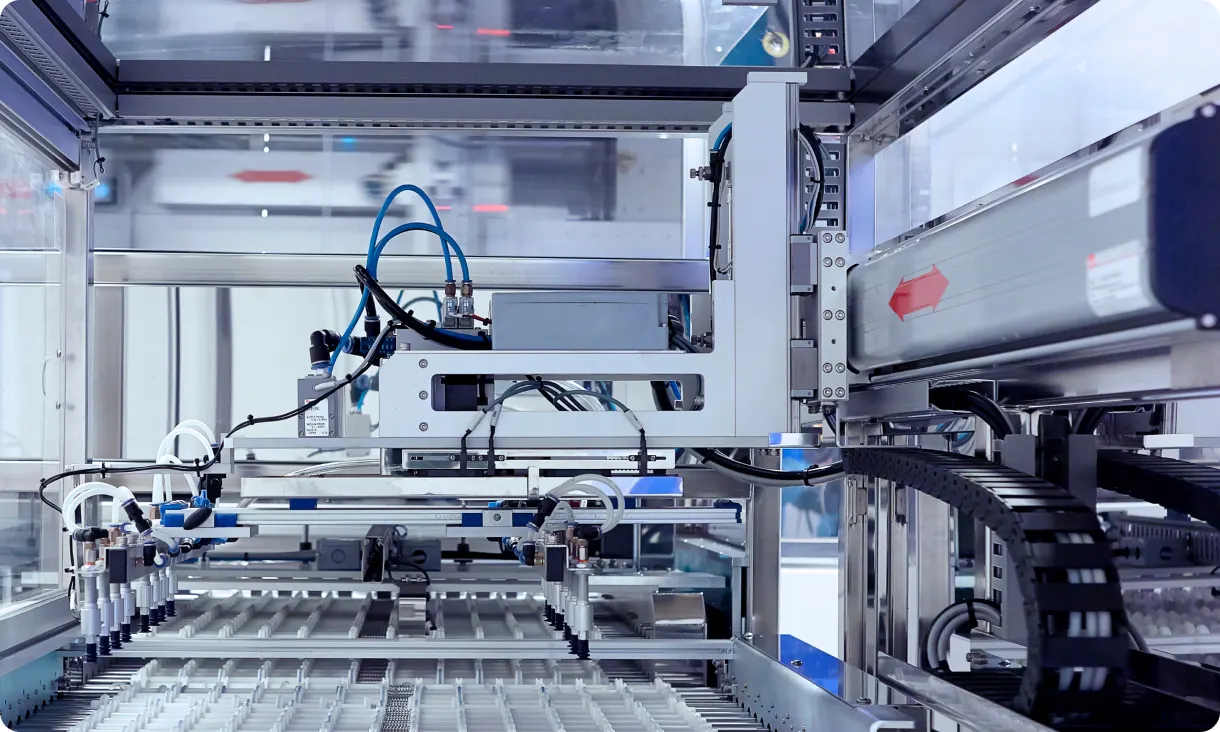
    Custom-designed assembly cells integrating joining operations, component insertion, dimensional verification and poka-yoke. Configurable for different levels of automation depending on volume and product variability.

    Línea automatizada de ensamblaje de conjuntos metálicos

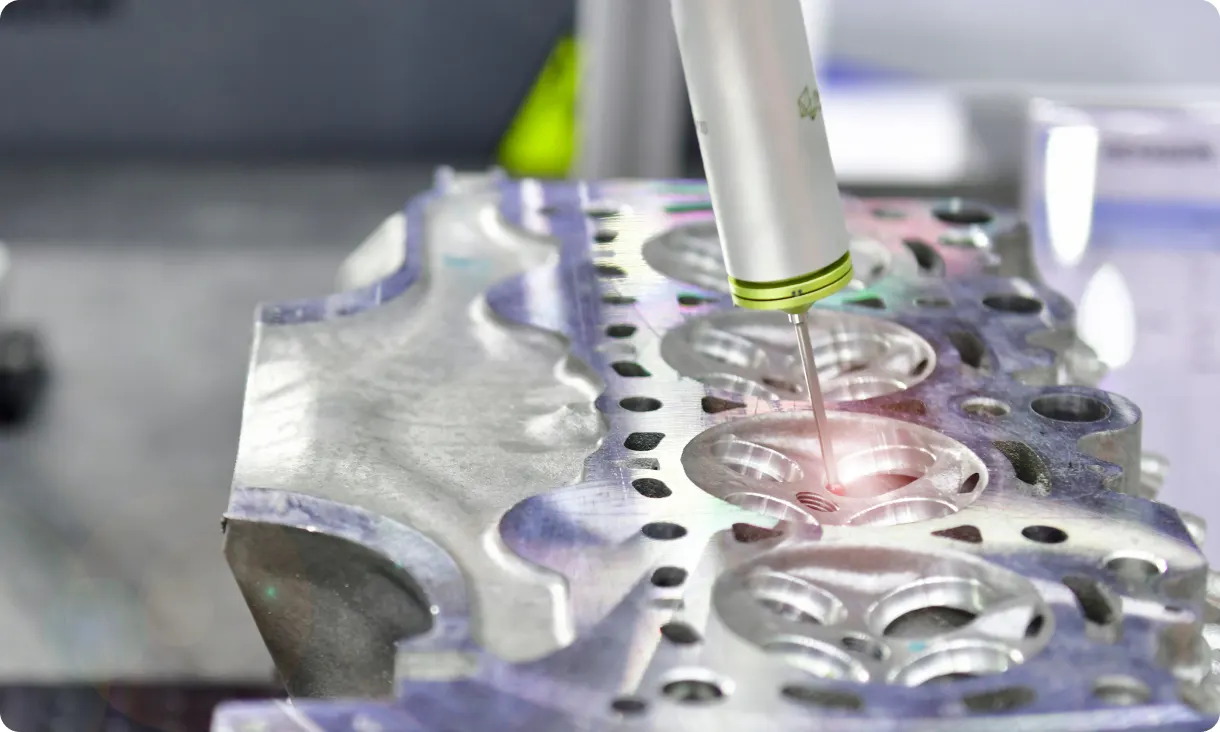
    Máquina de medición por coordenadas (CMM) inspeccionando una pieza

    Quality control equipment integrated into production

    Dimensional measurement and conformity checks built into the production flow: Trimer CMM measuring equipment and, in collaboration with MESHIND, on-site 3D scanning for the inspection of complex assemblies. Process parameters are recorded and traced by part number and batch in accordance with IATF 16949.


    Need to manufacture a metal component or assembly?