MESHIND Technologies
Advanced welding, additive manufacturing and 3D digitalisation for high-precision industrial solutions.

Advanced welding, additive manufacturing and 3D digitalisation for high-precision industrial solutions.
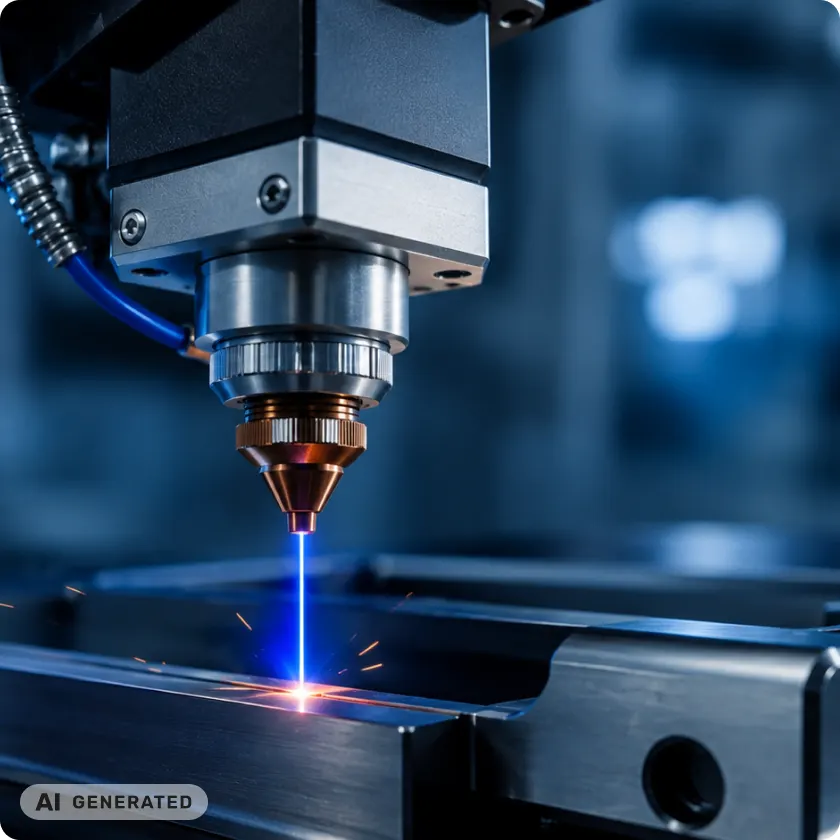
We select the most suitable joining process for each application, based on material, geometry, tolerances, required strength and production volume.
Laser welding uses a high-energy beam to melt and join materials at the contact zone without adding extra material.
The concentration of the beam’s energy allows work with very small heat-affected zones, resulting in joints with high metallurgical integrity, minimal distortion and an excellent dimensional finish.
Key advantages
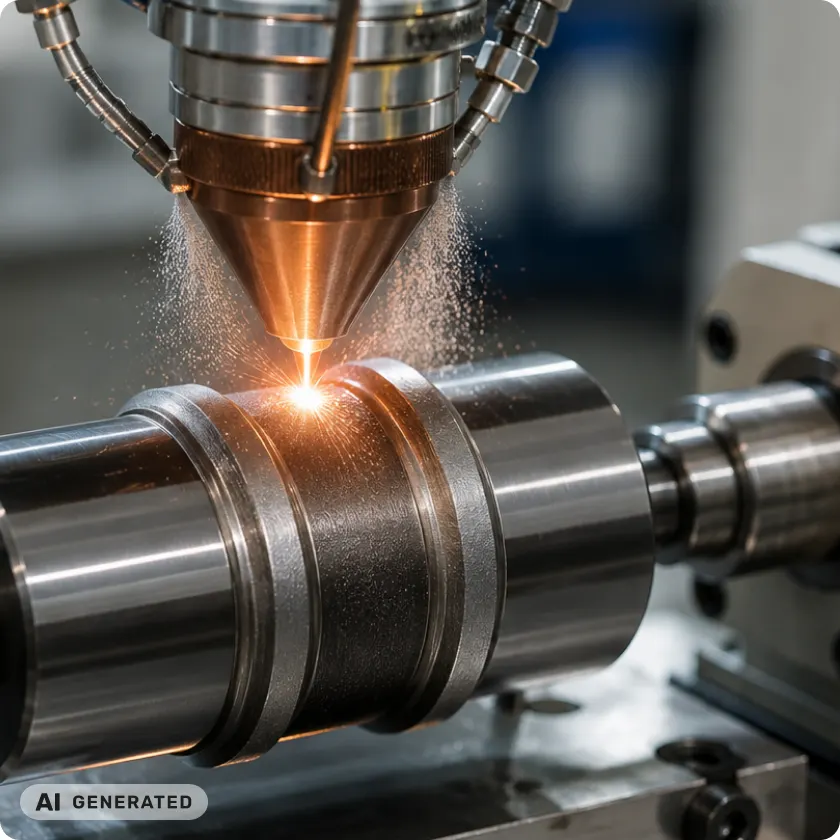
The LMD process deposits metal powder directly onto the surface using a high-precision laser, creating a complete metallurgical bond with the base material.
Main applications
Joining
Enables strength and/or sealing joints in assemblies with wide fit tolerances, bridging gaps of up to 1 mm.
Coatings
Deposition of high-performance material to improve resistance to wear, corrosion or severe tribological conditions.
Rebuilding
Dimensional recovery of worn parts or adaptation to new specifications without the need to manufacture a new part.
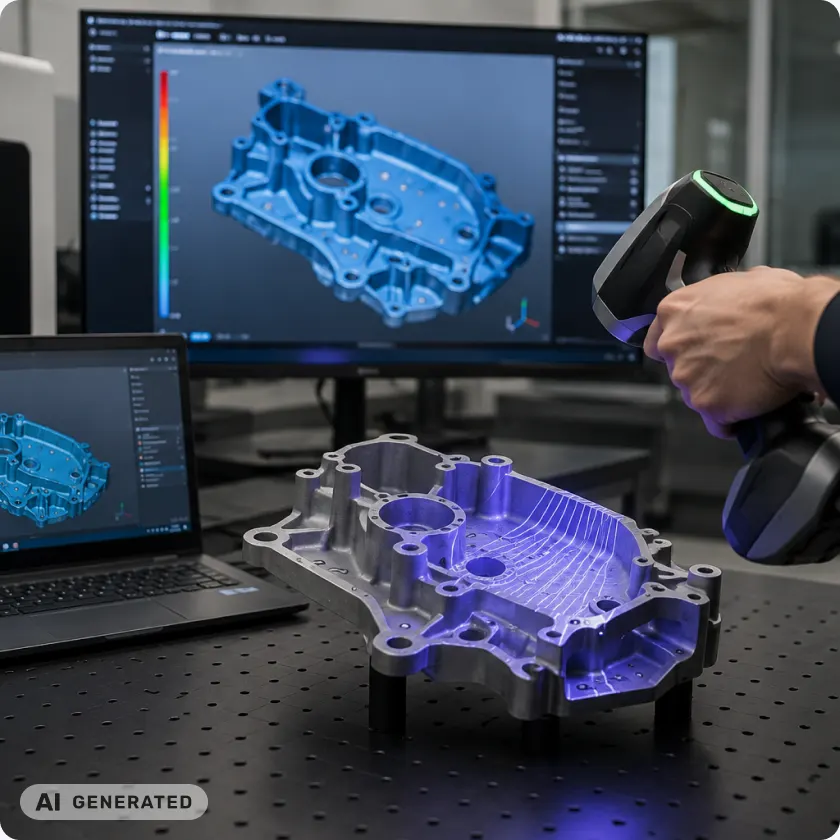
We capture, analyse and transform the reality of your components into accurate data to improve control, quality and product development.
High-precision capture of part and assembly geometries, directly on the shop floor and in process, with no need for disassembly.
Full analysis of mesh deviations and dimensional and geometric errors against the CAD model and drawing, with customised reports according to the standard and customer specifications.
Conversion of the scan into optimised CAD models for redesign, additive manufacturing and product development.
Follow this guide to identify the most suitable process for assembling metal parts.
Yes
Insertion of threaded components (clinch nut, press-in stud, self-drilling screw, thermal forming – flowdrill)
No
Continue to the next step
Yes
Continue to the next step
No
Clinching or riveting
Autogenous
RSW or LBW
With filler material
TIG, MIG-MAG or LMD
High volume, critical repeatability
Robotic RSW, LBW, robotic MIG-MAG
Low or medium volume
Manual and semi-automatic TIG, LMD
One-off parts, repair
LMD
| Process | Base material | Typical thickness | Mechanical strength | Filler material? | Cycle rate | Ideal for |
|---|---|---|---|---|---|---|
| Robotic RSW | Steel, Stainless steel | 0,5 – 3 mm | High (spot) | No | Very high | Sheet metal assemblies in volume production |
| MIG-MAG | Steel, Stainless steel | 1 – 10 mm | High (bead) | Yes | High | Welded assemblies |
| TIG | Steel, Stainless steel, Al | 0,5 – 6 mm | Very high | Optional | Medium | Precision joints |
| LBW | Steel, Stainless steel, Al | 0,2 – 4 mm | Very high | No | High | Complex components |
| LMD | Steel, Stainless steel, Superalloys | Variable | Very high | Yes | Medium | Coatings and rebuilding |
| Clinching | Steel, Stainless steel, Al | 0,5 – 3 mm | Medium-High | No | High | Heat-free joints |
| Riveting | Steel, Al, Dissimilar materials | 1 – 6 mm | Medium-High | No | Medium | Dissimilar materials |
| Threaded insert | Steel, Stainless steel, Al | 0,5 – 3 mm | High (axial tension) | No | High | Removable fasteners |
| Flowdrill (thermal drilling) | Steel, Stainless steel, Al | 1 – 3 mm | Extremely high | No | Medium | Removable fasteners |
We analyse your component, its functional requirements and the production volume.


